A useful bin starts
by being noticed.
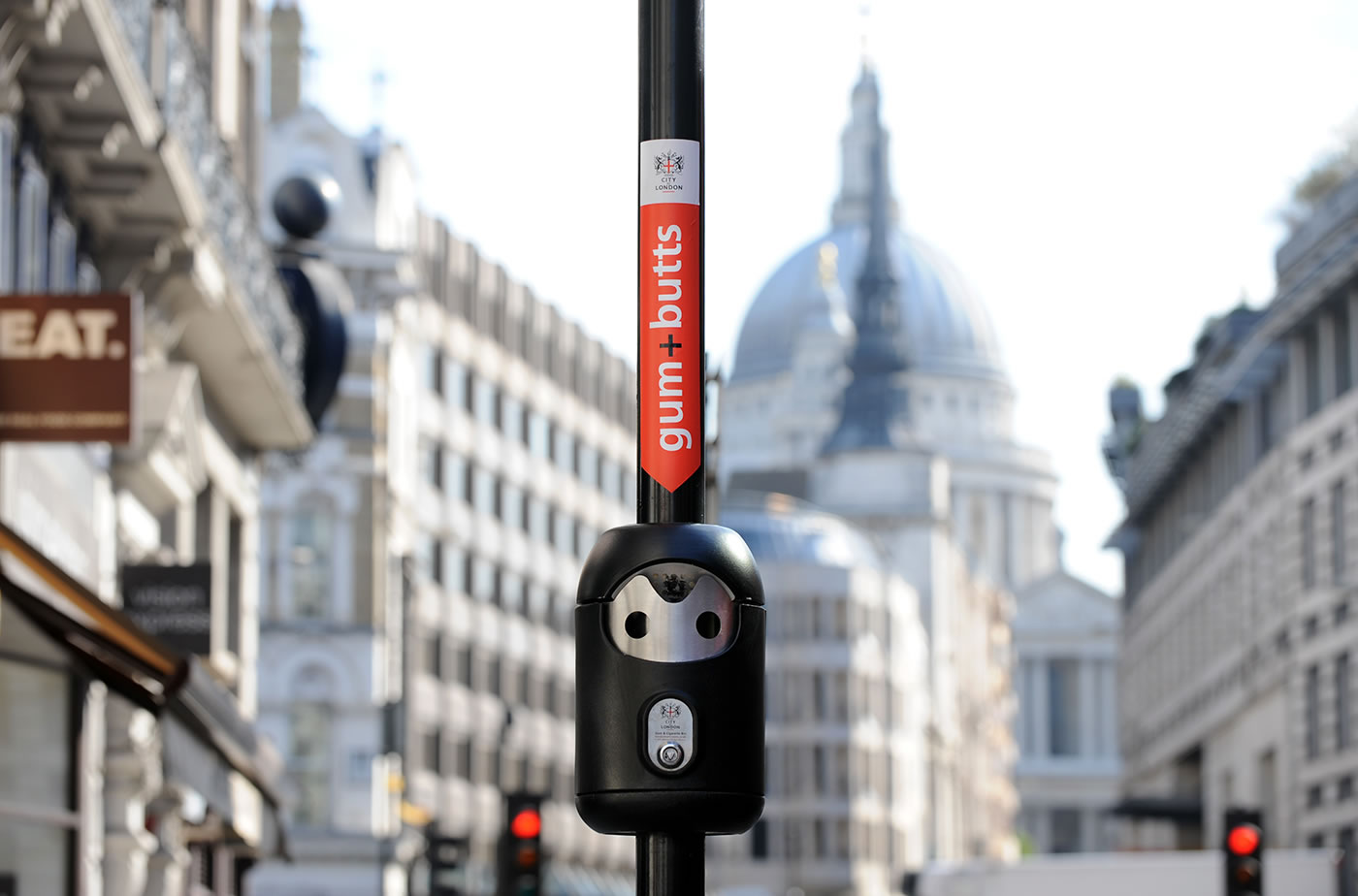
A clear, recognisable disposal point helps people understand where cigarette ends and gum belong. Visibility is part of the job.

Behaviour change by design
Most people know they shouldn’t litter.
The more interesting question is: does the street make the right choice easy?
A small shift in perspective
We can ask people to be more considerate. But we can also design a little more consideration into the places where decisions happen.
That is the thinking behind Smartstreets: make disposal easier to find, easier to reach and easier to repeat. Give good intentions a practical destination.
Design around the moment
The opportunity is often surprisingly ordinary. A familiar route. Somewhere to pause. A suitable post already standing in the right place.
A clear, recognisable disposal point helps people understand where cigarette ends and gum belong. Visibility is part of the job.
Start with pedestrian routes and litter hotspots. Ask whether people encounter a usable bin at the moment they need one.
A consistent network can make the next disposal point more predictable. Plan the pattern, maintain it and see what changes.
The distinctive idea
Lamp posts and sign posts already form a familiar rhythm through our streets. Suitable posts can become a recognisable network of disposal points.
A repeated pattern can make disposal easier to anticipate. Illustration of the design principle, not a measured result.
Smartbins fit back to back around lamp posts and sign posts, with fittings selected for the column. A consistent disposal point across a remarkably varied street scene.

Thought through from both directions
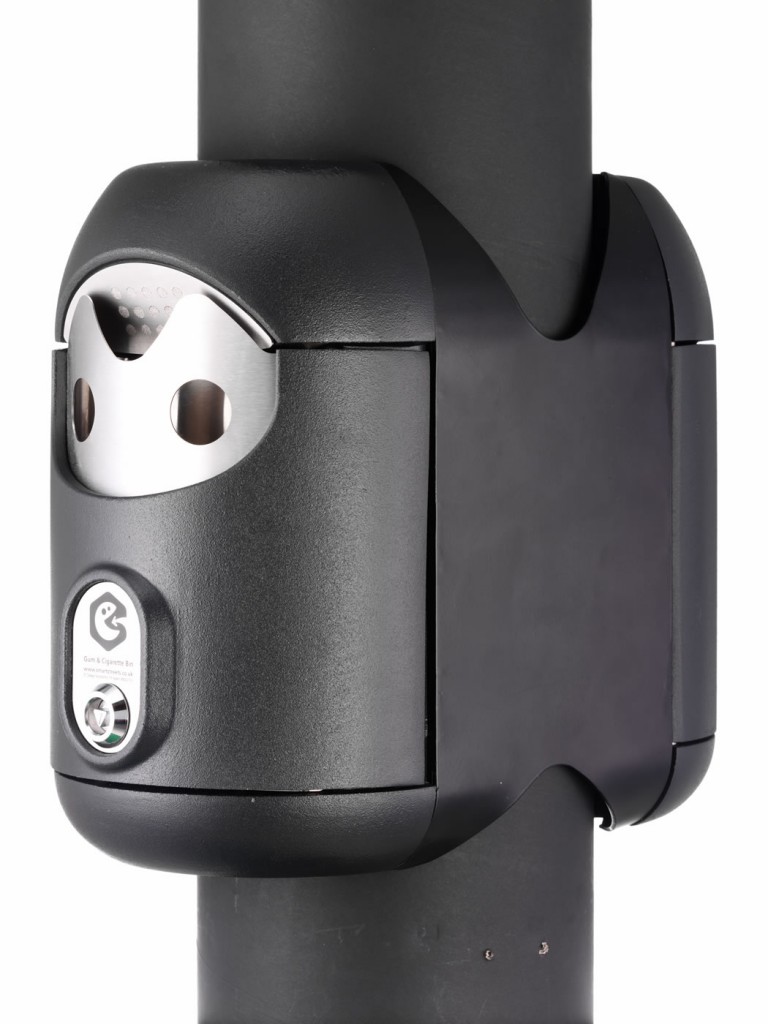
Pedestrians don’t all arrive from the same direction. The twin Smartbin configuration presents a bin to people approaching along either side of the pavement.
Two bins fit back to back around a suitable existing post, adding a function without adding a separate freestanding support.
Make more of what is already there.
Explore Smartbin design & fittings ↗The thinking travels
The same question leads to different practical answers: what would make considerate behaviour easier, here?
Disposal on the move
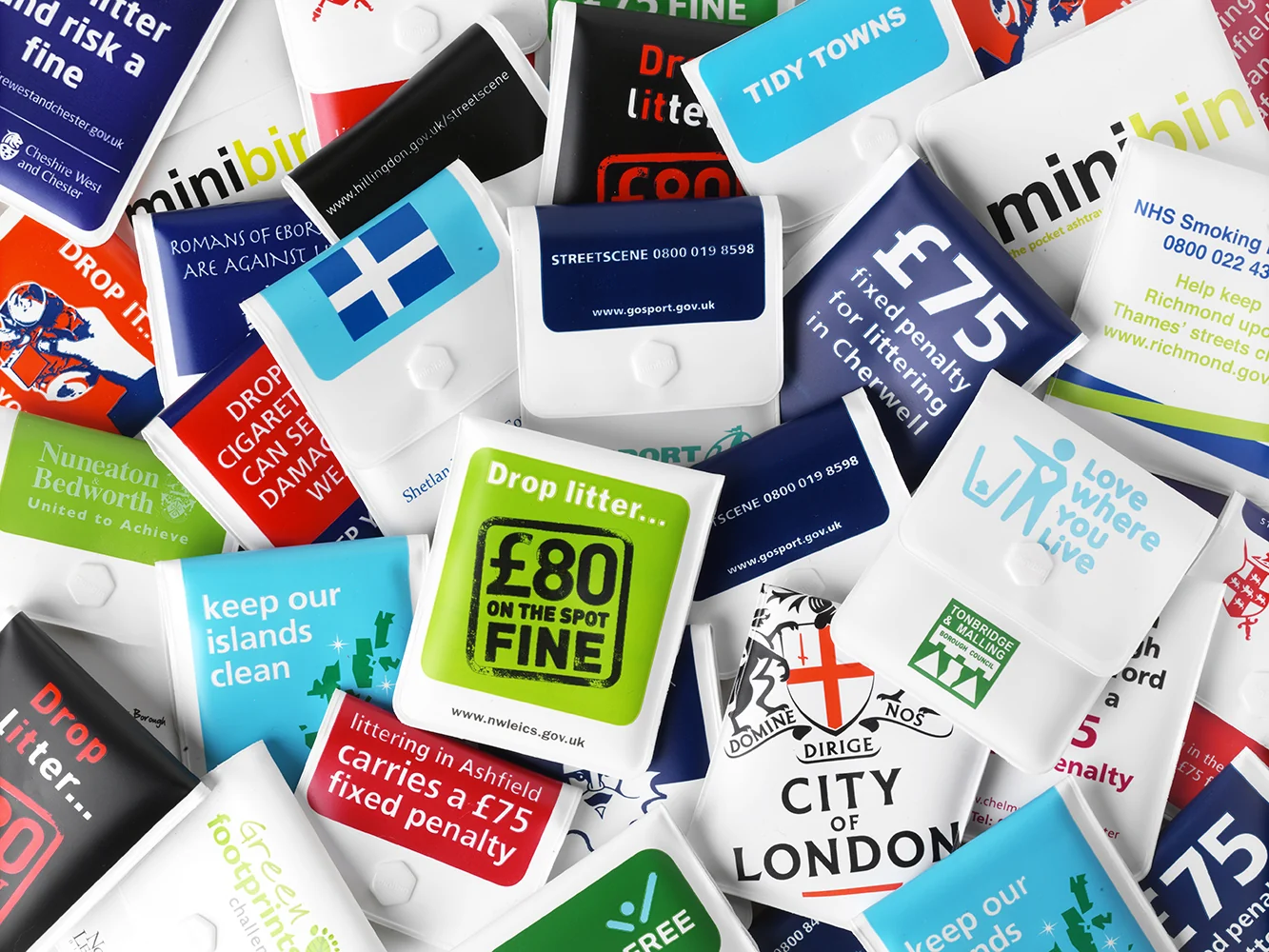
When a fixed bin is out of reach, a pocket ashtray provides somewhere to keep cigarette ends until they can be disposed of properly. A campaign message becomes something people can use.
Discover Minibin ↗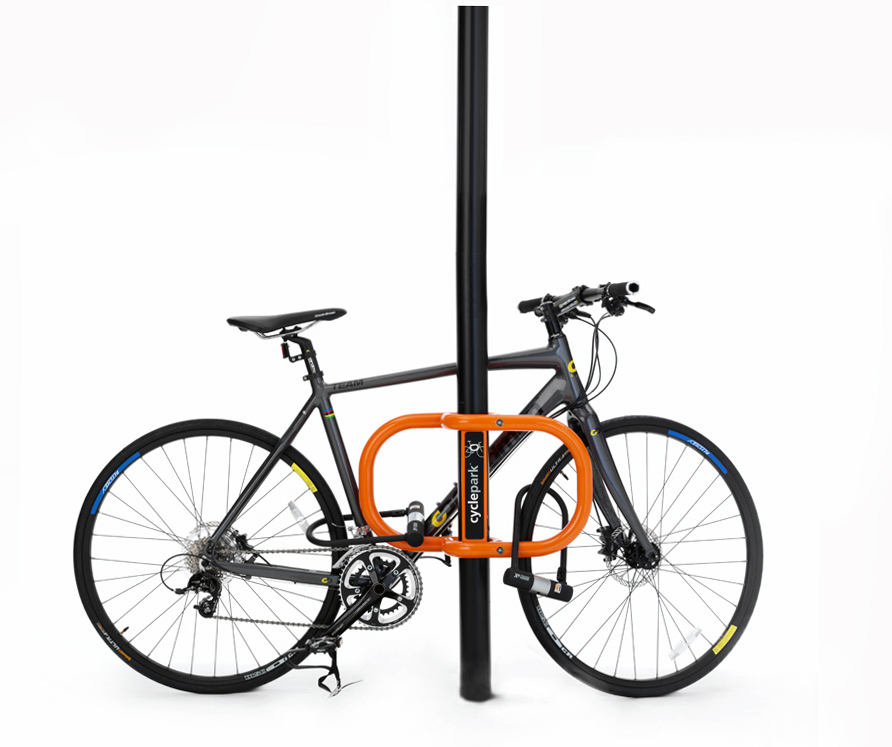
At the end of the journey
People need suitable bike parking close to the place they are visiting. Explore how appropriate existing posts could provide that useful final connection.
Discover Cyclepark ↗Evidence, with the whole story
64%
reduction in smoking-related litter reported in the City of London case study.
This was a wider programme combining Smartbins, pocket ashtrays, communication and enforcement. It shows what a coordinated approach achieved in that setting.
It is not a promise that installing a bin alone will deliver the same result everywhere. The useful question is what a thoughtfully planned scheme can achieve in your location.
Historical case-study result. Outcomes vary with location, coverage, use, communication and servicing. Measure litter on the ground as well as material collected.
Read the City of London case study ↗Imagine finishing a cigarette while walking to a meeting. You may fully intend to dispose of it properly. But at that particular moment, where does it go? A message about litter and a usable disposal point are doing two quite different jobs.
The message tells you what you ought to do. The disposal point makes it possible to do it. The closer those two things come together, the more useful the whole arrangement becomes.
This is the starting point for Smartstreets: put the solution where the decision happens. Look at the places people pause, the routes they follow and the spots where litter repeatedly appears. Then ask whether the street is making considerate disposal easy enough.
It is tempting to judge provision by counting containers. Yet ten bins in places people rarely encounter may be less helpful than a smaller, carefully placed network. The important question is whether someone comes across a usable disposal point when they need one.
Lamp posts and sign posts offer an interesting opportunity. They are already part of the street. Repeating a recognisable disposal point on suitable posts can create a pattern people learn to look for.
The ambition is a network that feels part of the route, rather than a collection of isolated objects. It needs a survey, appropriate permissions and attention to access, clearances and servicing. Predictability is designed through placement; it is not something a container creates by itself.
People tend to approach a pavement fixture from more than one direction. A disposal point that is obvious from one approach can be much less obvious from the other.
The twin Smartbin arrangement fits two bins back to back around a suitable post, presenting an opening to pedestrians approaching along either side. It is a practical design response to the way a pavement is used.
Using an existing post also avoids introducing a separate freestanding support at every location. The objective is to add a useful function while respecting the street scene. Every location still needs checking for suitability.
A fixed network cannot cover every moment of a journey. That is where a reusable pocket ashtray has a different role: it lets someone carry a disposal point with them.
A campaign leaflet asks people to remember a message. A practical object gives them a way to act on it. The two can work together, but they should not be confused.
The same interest in the end of a journey applies to cycling. Someone arriving by bike needs a suitable place to secure it near the place they actually want to visit. Existing posts may offer an opportunity to provide parking there, subject to fit, access and installation checks.
Material collected tells us a disposal point is being used. It does not, on its own, tell us how much litter would otherwise have reached the ground. That is a different question, and it deserves a different measure.
The published City of London case study reports a 64% reduction in smoking-related litter as part of a wider programme. That programme combined Smartbins, pocket ashtrays, communication and enforcement. It is evidence for a coordinated approach, rather than a promise about what a bin will achieve in every location.
Local results should be checked locally. Count litter on the ground before and after installation, use comparable conditions and record the work involved in cleaning and servicing. A comparison location can help where it is practical.
The most useful next step may be quite modest: choose a persistent problem location and understand it properly. Where do people stop? Where are cigarette ends and gum accumulating? Which posts or other mounting positions are suitable?
Agree who will install and service the equipment, what will be measured and when the results will be reviewed. Include cleaning time, servicing time and the experience of the people who look after the street.
The purpose is to learn whether the arrangement works in that place. Keep what helps, refine what does not and use the evidence to decide what happens next. Better provision begins with an idea. A better scheme keeps learning.
Look at the location. Plan suitable provision. Agree how it will be maintained. Then test whether it makes a practical difference.
Explore planning a scheme ↗About this perspective
Original Smartstreets commentary on behavioural design. The mechanisms described are design principles to test locally, not guaranteed outcomes. Product suitability, permissions, pedestrian access and servicing must be considered for each scheme.
Research on behaviour change and context ↗City of London case study ↗